Environmental Filtering Weakens with Trophic Level

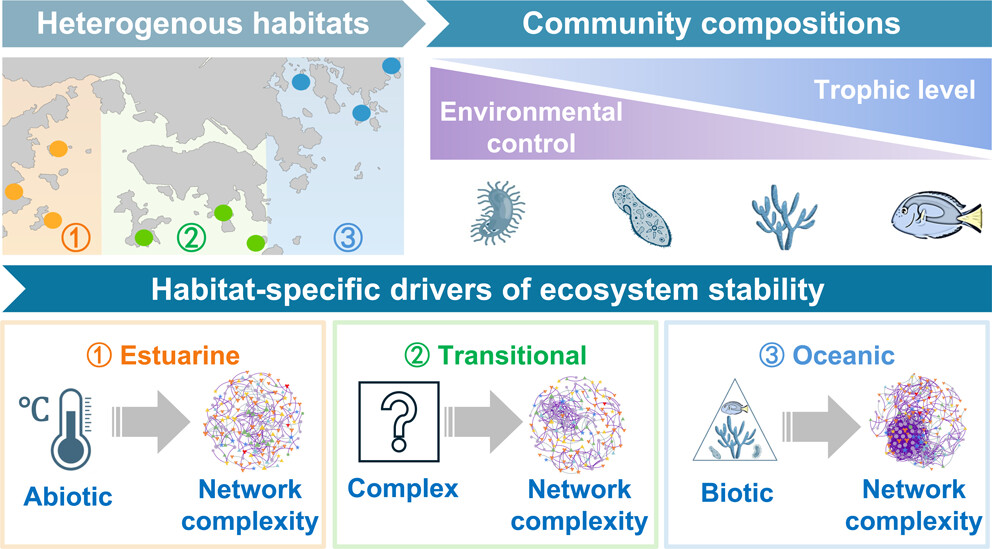
We are proud to announce the publication of our latest study, “Environmental Filtering Weakens with Trophic Level in Urban Coastal Ecosystems,” in Environmental Science & Technology. Led by Wenqian Xu, this research offers a critical look at how urbanization impacts the structure of marine food webs. Our study investigates the forces shaping community assembly across different trophic levels,from primary producers to higher-order consumers, within urbanized coastal waters. We found that while environmental conditions strongly dictate the composition of lower trophic levels (like phytoplankton), this “environmental filtering” effect significantly diminishes as you move up the food chain. Higher trophic levels appear to be less constrained by immediate water quality parameters and more influenced by biological interactions and dispersal limitations. These findings have important implications for coastal management and restoration. They suggest that improving water quality alone may not be sufficient to restore higher-order biodiversity in urban seas, highlighting the need for a holistic approach that considers the distinct ecological drivers acting at each level of the food web.
The Stability-Flexibility Paradox in the Coastal Microbiome

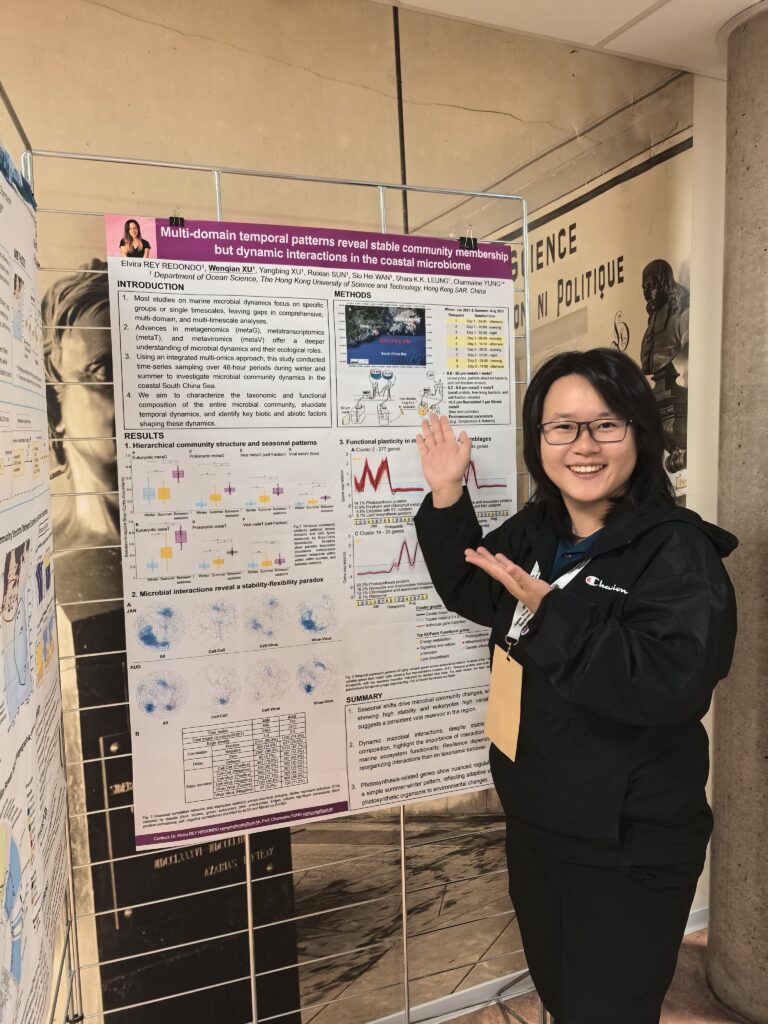
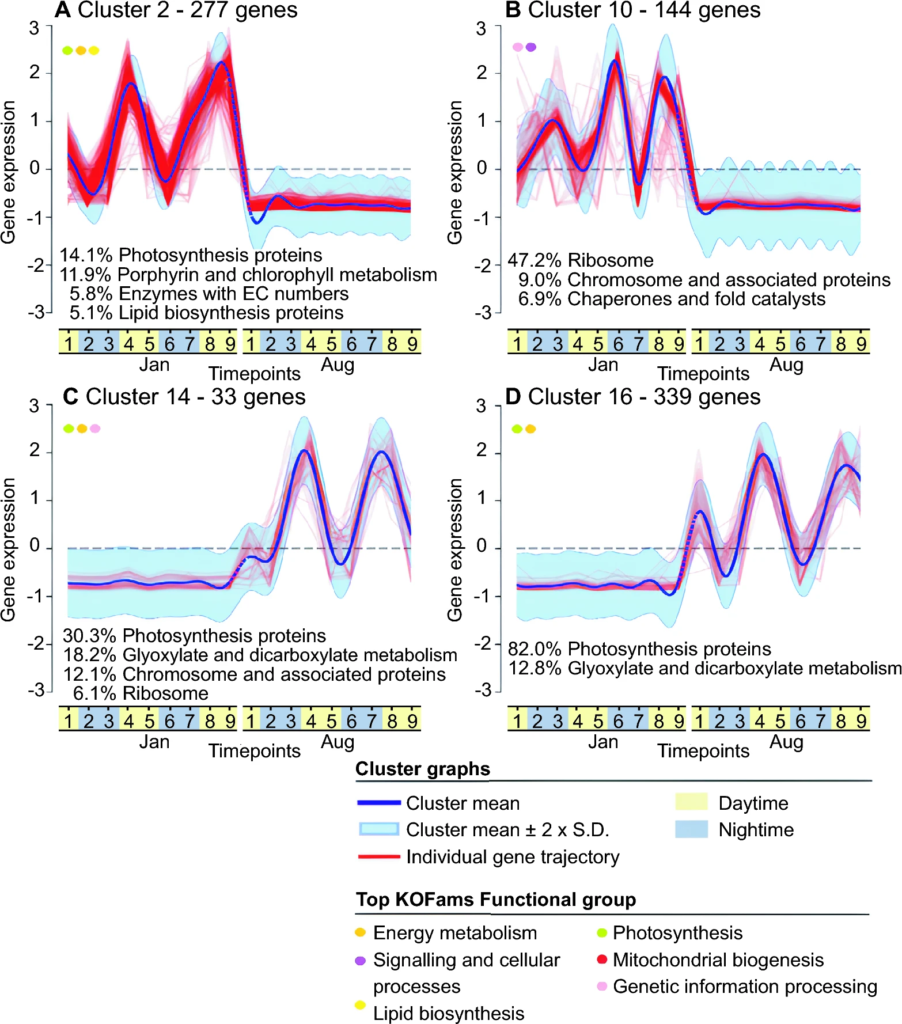
We are excited to announce the publication of our latest study, “Multi-domain temporal patterns reveal stable community membership but dynamic interactions in the coastal microbiome,” in Environmental Microbiome. Led by Elvira Rey Redondo and the team at HKUST, this research utilizes a multi-omics approach to map the complex seasonal dynamics of the South China Sea. Our findings uncover a fascinating “stability-flexibility paradox” within marine ecosystems. While the taxonomic membership of the microbial community remains surprisingly consistent between winter and summer, the interactions between these microbes undergo a massive rewiring. This suggests that coastal resilience relies less on species turnover and more on the community’s ability to reorganize its internal network in response to environmental shifts. The study also highlights the unexpected stability of viral communities, supporting the viral seed bank hypothesis and revealing how viruses act as persistent reservoirs that buffer environmental fluctuations. These insights are critical for understanding how marine food webs adapt to a changing climate.

Read the full open-access article here: https://doi.org/10.1186/s40793-025-00803-5

9 Oct 2025 Monitors Fish Restocking with eDNA Technology

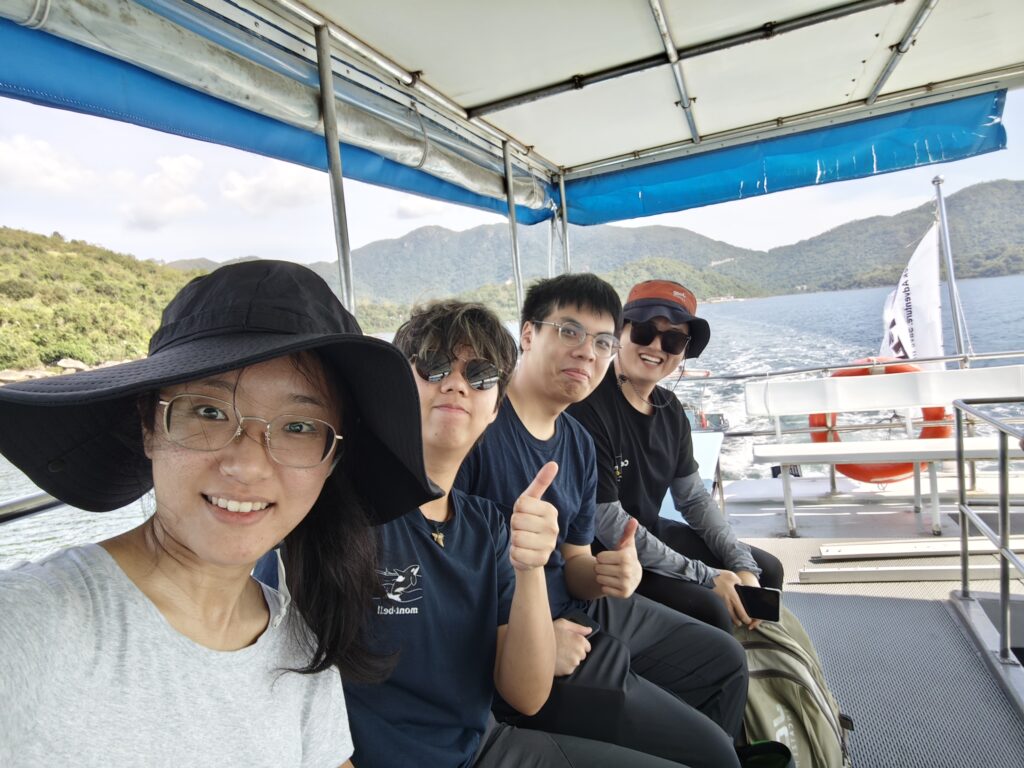
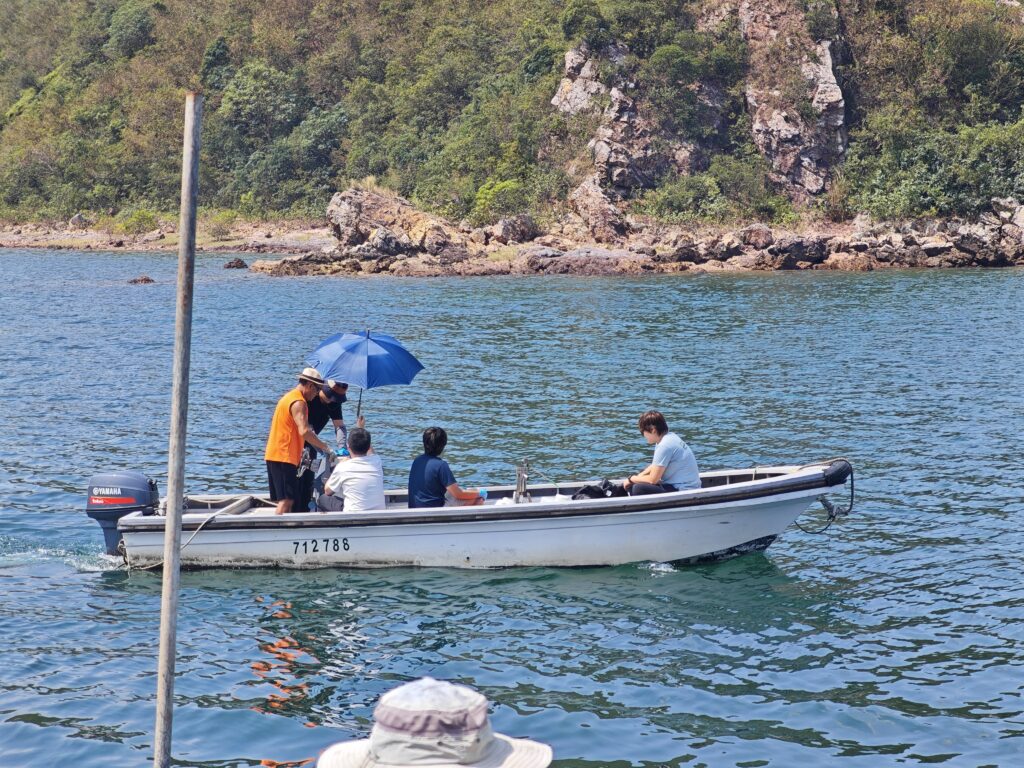
Dr. Yung’s laboratory is conducting an innovative monitoring project for Hong Kong’s Agriculture, Fisheries and Conservation Department, using environmental DNA (eDNA) technology to track over 21,000 juvenile fish released at Yan Chau Tong Marine Park this September. On October 9th, the team carried out water sampling as part of several planned follow-up visits to detect genetic material naturally shed by the restocked fish—including Hong Kong grouper, star snapper, black seabream, and red seabream. This non-invasive approach offers a revolutionary alternative to traditional underwater surveys, requiring only water samples that can be analyzed in the lab. By tracking how the genetic signature changes over time through multiple sampling events, Yung’s lab is helping prove whether eDNA can effectively monitor restocking success.


Congratulations Dr. Yangbing Xu on his PhD Achievement!

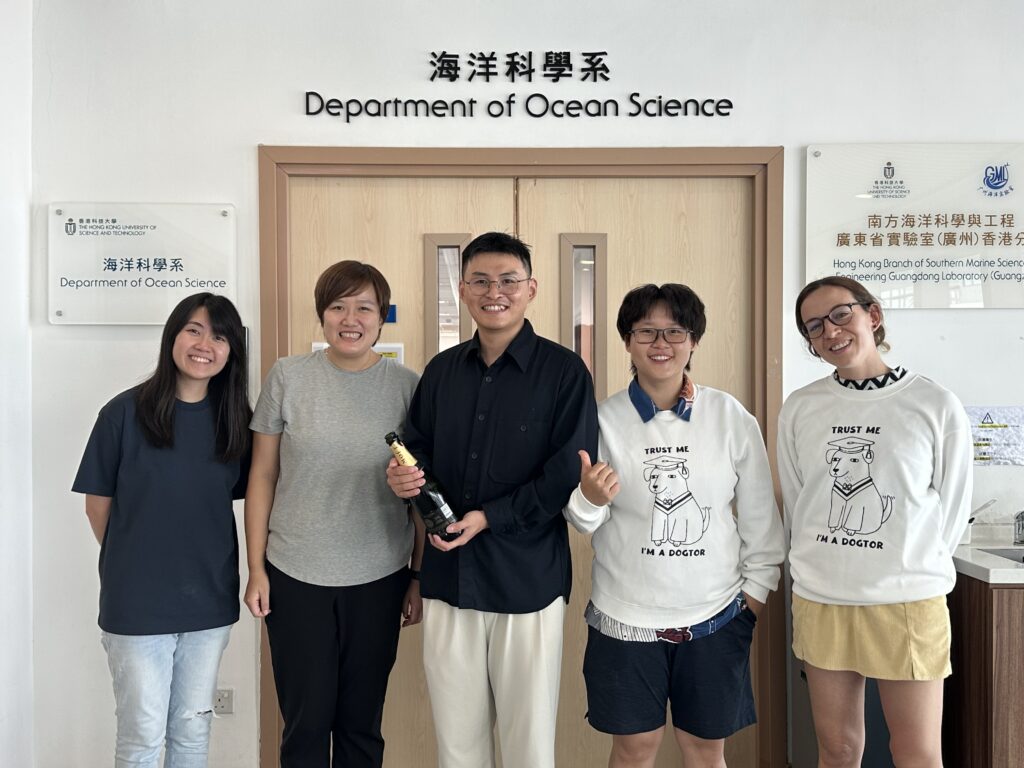
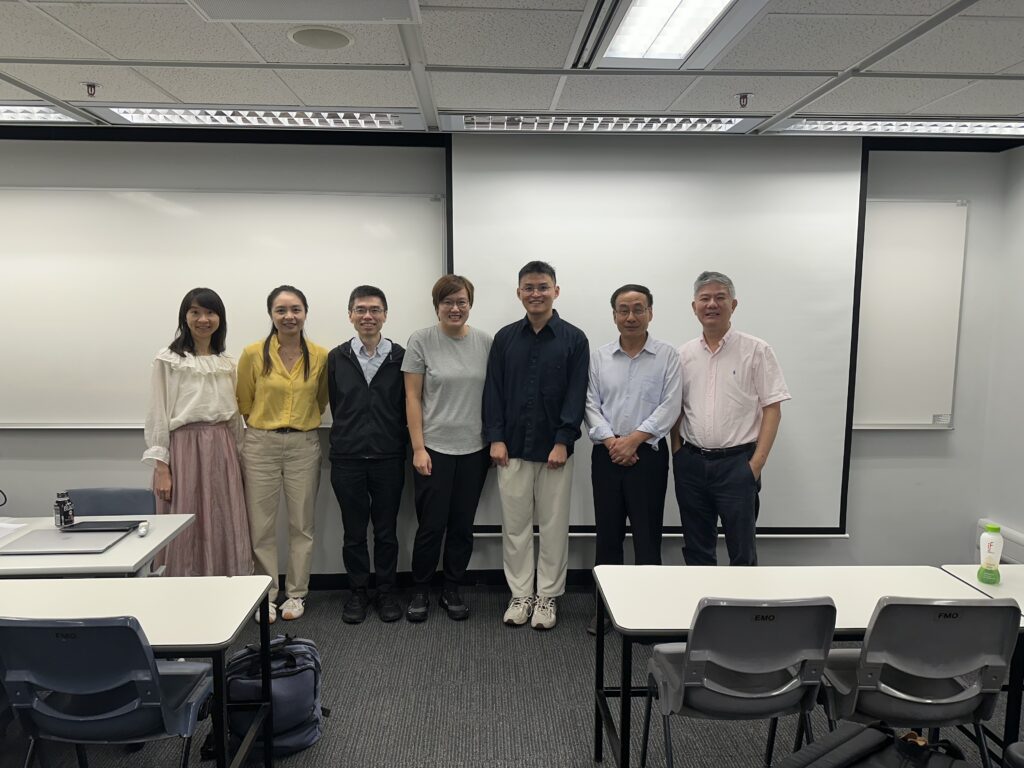
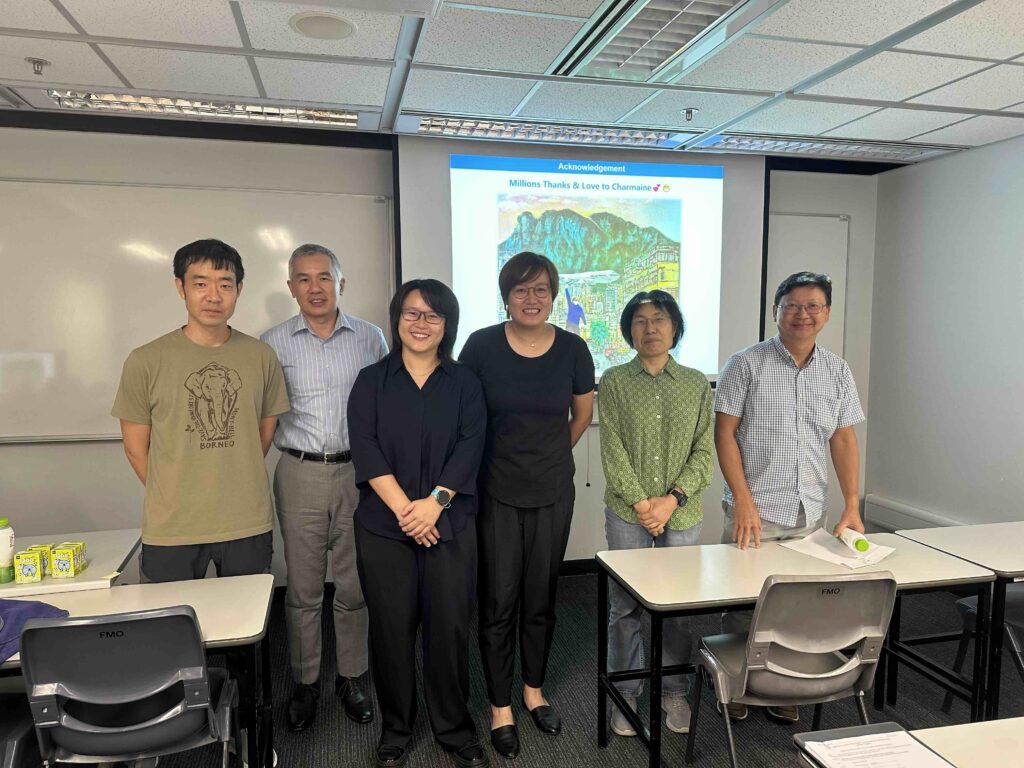
We are thrilled to celebrate the successful thesis defense of Dr. Yangbing Xu ! On September 30, 2025, Dr. Xu presented his doctoral research titled “Unraveling Virus-Microbe Interactions in the Ocean”: An Integrated Approach from Cultivation to Community-Wide Multi-Omics,”. Dr. Xu’s work represents a significant leap forward in marine viral ecology. Through an innovative integration of cultivation techniques and cutting-edge multi-omics approaches, he tackled one of oceanography’s most persistent challenges: understanding the vast realm of uncharacterized “Viral Dark Matter” in our oceans.

20 Sep 2025 Viral Ecology in the Pearl River Estuary

Congratulations to Ruixian Sun on the publication of their MPhil thesis work in ISME Communications! The study “Environmental Gradients Shape viral-Host dynamics in the Pearl River Estuary” represents a comprehensive analysis of viral communities in one of China’s most dynamic estuarine systems. Using metagenomic techniques across 24 samples, Ruixian identified nearly 30,000 viral units and made a surprising discovery: nucleocytoplasmic large DNA viruses were unexpectedly abundant in offshore waters, suggesting eukaryotic viruses play a larger role in coastal ecosystems than previously recognized. The research elegantly demonstrates how environmental factors like salinity and nutrients shape viral-host interactions, while revealing that viral auxiliary metabolic genes contribute to nutrient cycling. This work provides a holistic view of microbial ecology in estuarine environments, offering valuable insights into these critical transition zones between river and ocean ecosystems. (https://doi.org/10.1093/ismeco/ycaf164)

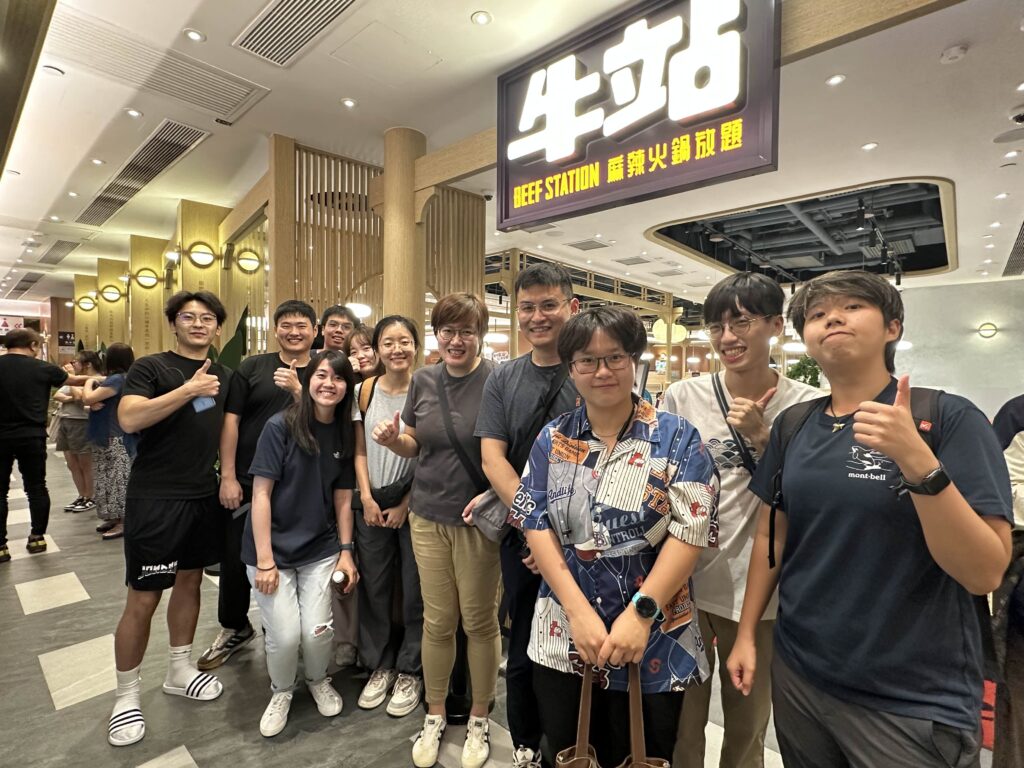
Celebrating Dr. Wenqian Xu’s outstanding PhD achievement!!

25 Aug 2025 Celebrating Dr. Wenqian Xu’s outstanding PhD achievement!!
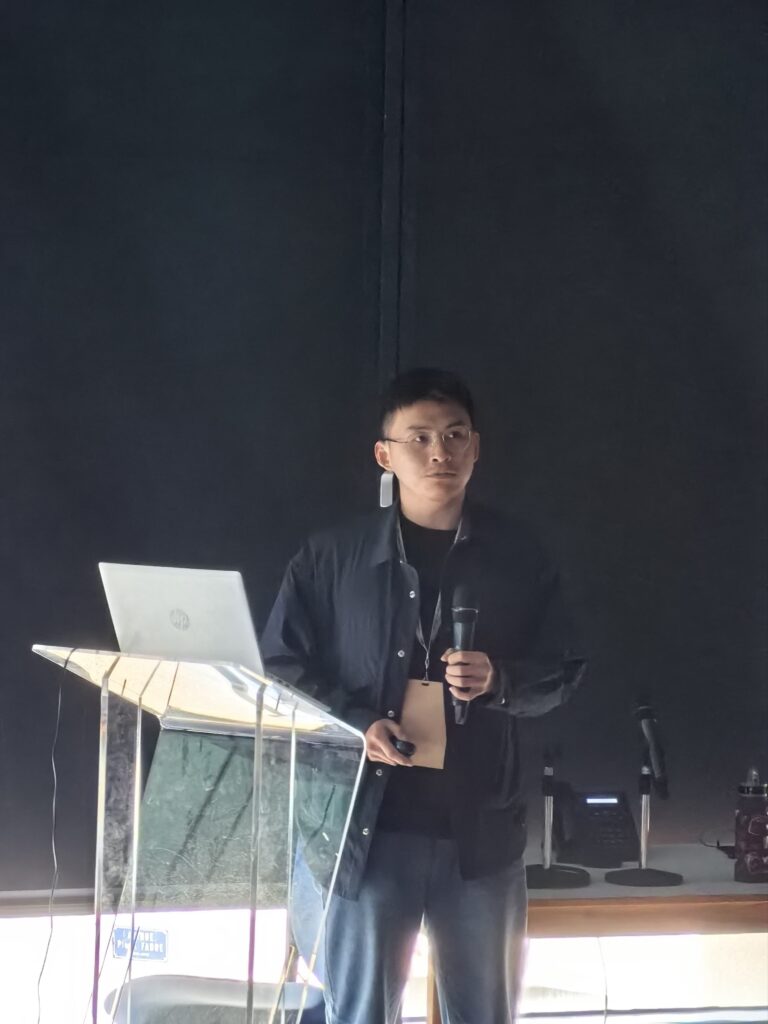
Today, Dr. Xu successfully defended her doctoral thesis “From Genomes to Ecosystems: Decoding Multi-Trophic Diversity and Dynamics in Subtropical Coastal Waters” before an impressive turnout of peers. The packed presentation room reflected the excitement surrounding her innovative research. Congratulations, Dr. Xu, on this well-deserved milestone!

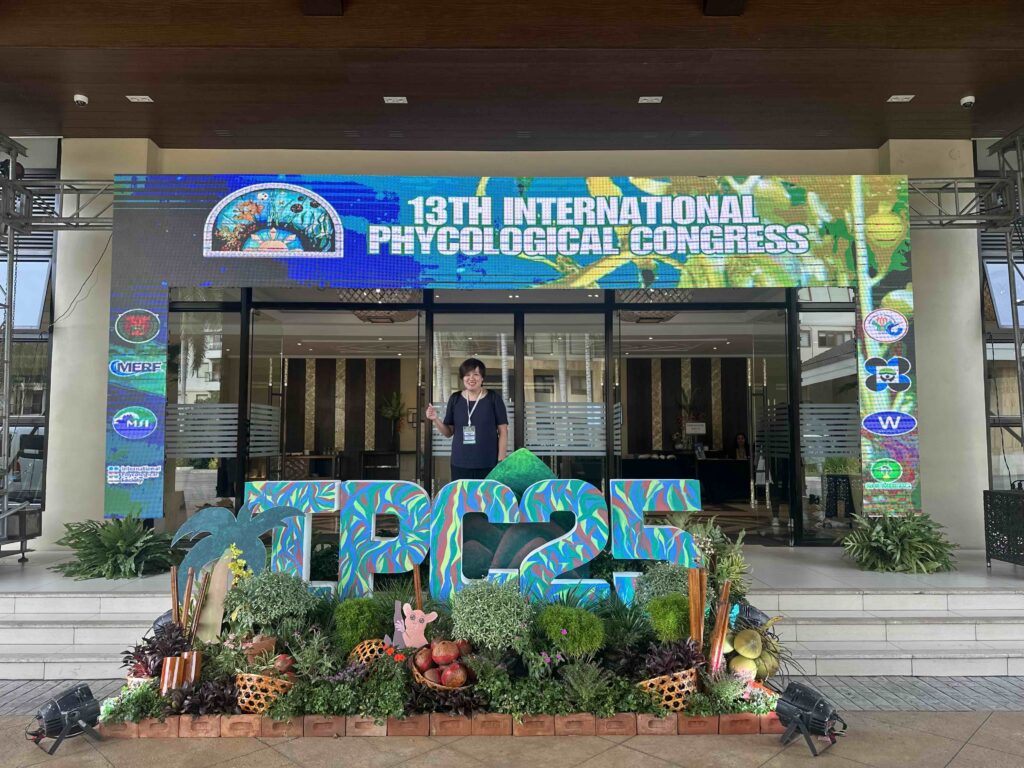
13th International Phycolocial Congress at Bohol, Philippines

8-13 Jun 2025 13th International Phycolocial Congress at Bohol, Philippines
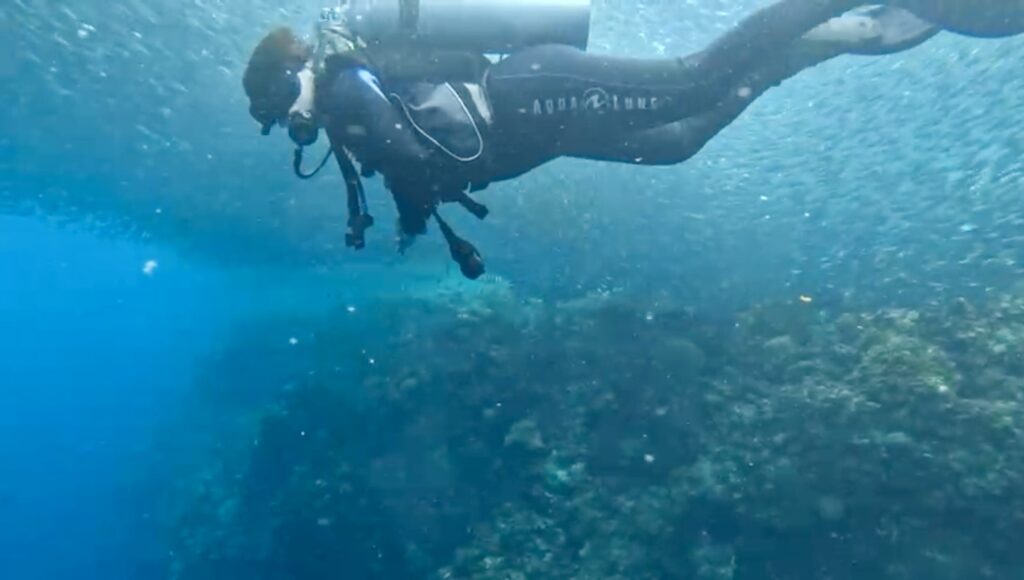
Charmaine recently attended the 13th International Phycological Congress in Bohol, Philippines, where she served as an invited speaker in the Special Symposium on algal distributions and population genetics. Her presentation, “Genomic Architecture and Biogeographical Distribution Patterns of Marine Mamiellophyceae,” showcased cutting-edge research into these microscopic marine algae that play crucial roles as primary producers in ocean ecosystems. Using advanced genomic techniques, her work reveals how these tiny organisms have dispersed across global oceans and adapted to diverse marine environments over evolutionary time. Between conference sessions, Charmaine took advantage of Bohol’s world-renowned diving opportunities to explore the vibrant underwater ecosystems where these invisible but vital microorganisms thrive, perfectly embodying the intersection of high-tech molecular research and hands-on marine field work that defines modern oceanographic science.

New Study on Vibrio Ecology in Hong Kong Waters

13 May 2025 New Study on Vibrio Ecology in Hong Kong Waters
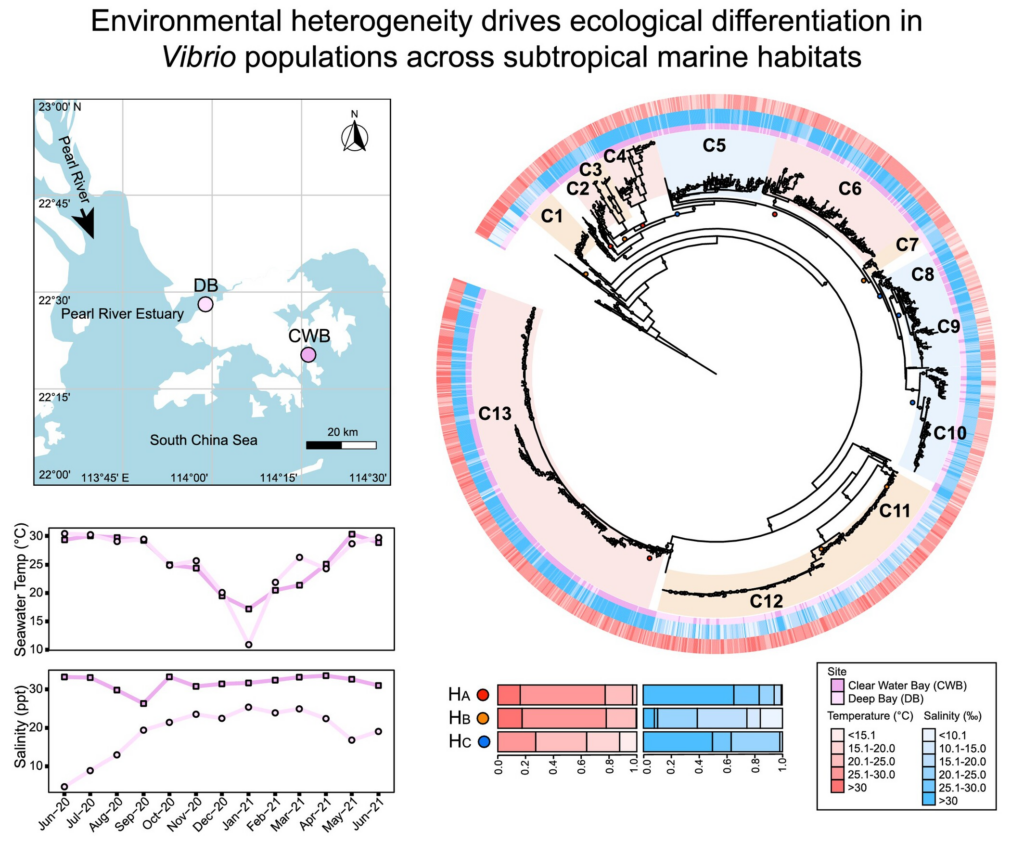
Our lab has published a new research paper: “Environmental heterogeneity drives ecological differentiation in Vibrio populations across subtropical marine habitats.” This year-long study compared Vibrio communities between Clear Water Bay (coastal) and Deep Bay (estuarine) sites in Hong Kong. Key findings include higher Vibrio abundance and diversity in the estuarine environment, with salinity driving community differentiation between sites and temperature governing seasonal patterns. We identified three distinct ecological groups adapted to specific temperature-salinity conditions, with evidence of habitat-specific thermal adaptations even among genetically similar strains. This research enhances our understanding of how environmental factors shape bacterial communities in dynamic marine environments and provides insights into mechanisms of microbial adaptation across different coastal habitats. (https://doi.org/10.1111/1462-2920.70107)

AVW12 Conference Highlights from Banyuls-sur-Mer

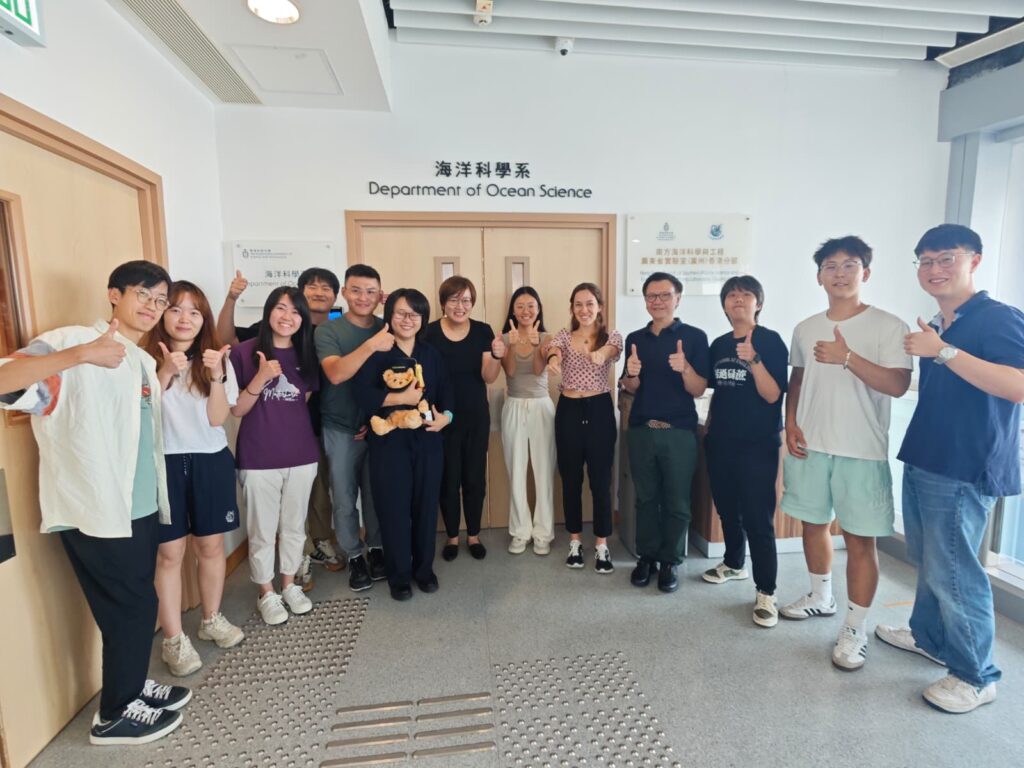
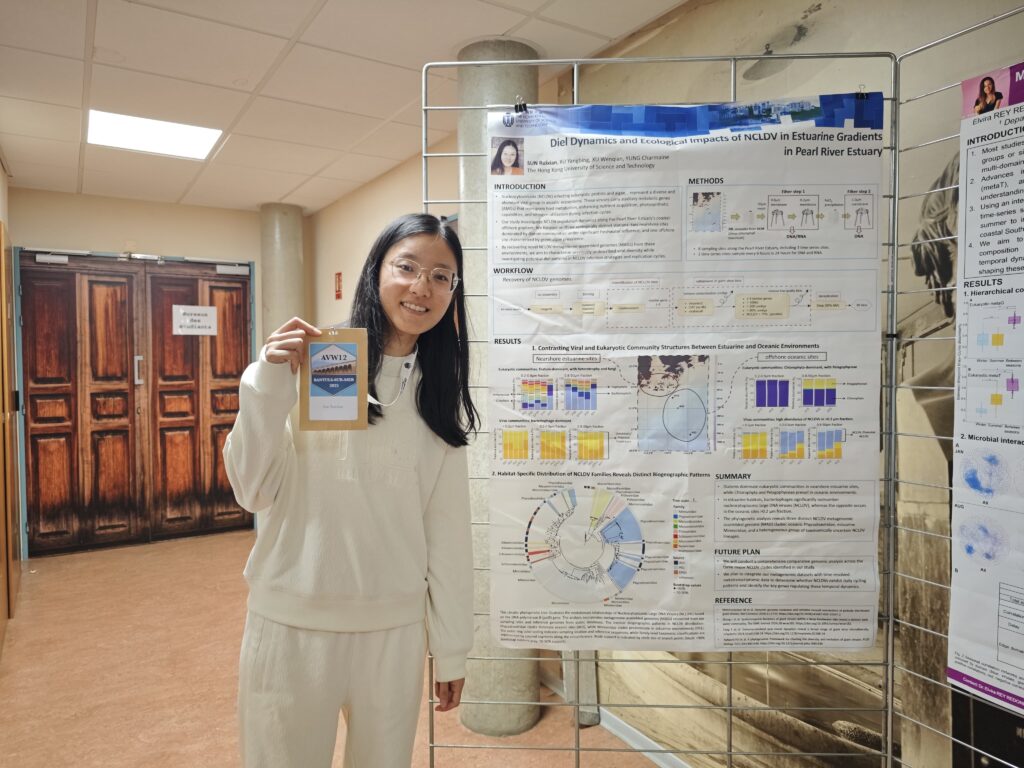
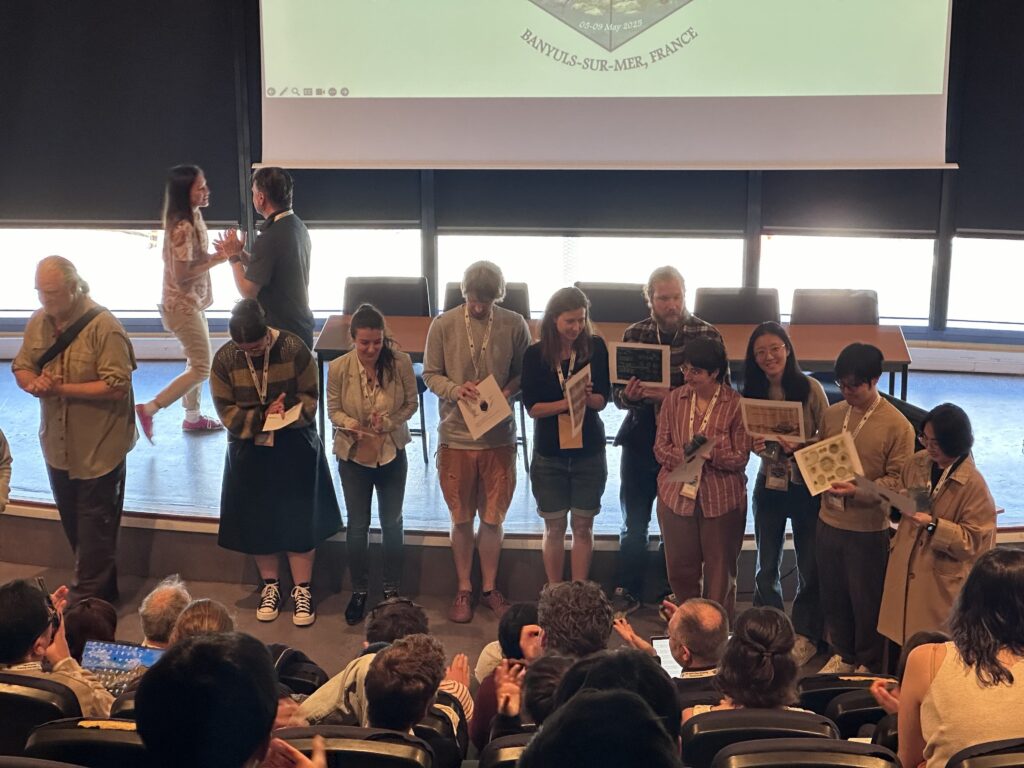
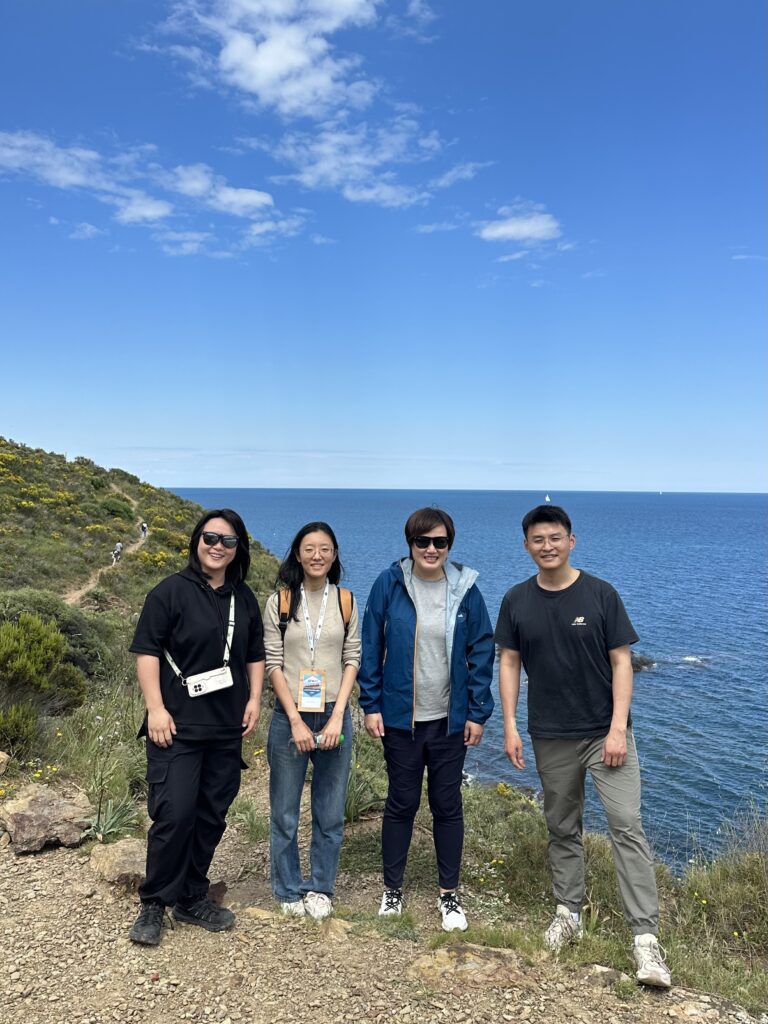
Our lab members recently participated in the 12th Aquatic Virus Workshop (AVW12) in Banyuls-sur-Mer, France. Prof. Charmaine delivered a talk on “Host-virus interactions in Mamiellophyceae: From Genomics to Ecosystem Impact,” while Yangbing Xu presented “Linking the Seasonal Dynamics of Virome to Microbiome in Coastal Seawater.” Wenqian Xu and Ruixian Sun contributed poster presentations on “Multi-domain temporal patterns reveal stable community membership but dynamic interactions in the coastal microbiome” and “Diel Dynamics and Ecological Impacts of NCLDV in Estuarine Gradients in Pearl River Estuary,” respectively. We’re proud to share that Ruixian Sun won the excellence poster prize. During free time, the team enjoyed a short hike along the beautiful Mediterranean coastline of Banyuls-sur-Mer, strengthening collaborations and exchanging ideas in this inspiring setting. Looking ahead, we’re thrilled to share that Charmaine will bring this prestigious gathering to Hong Kong as host of AVW13 in 2027. Stay tuned!

Thesis Defense Success!

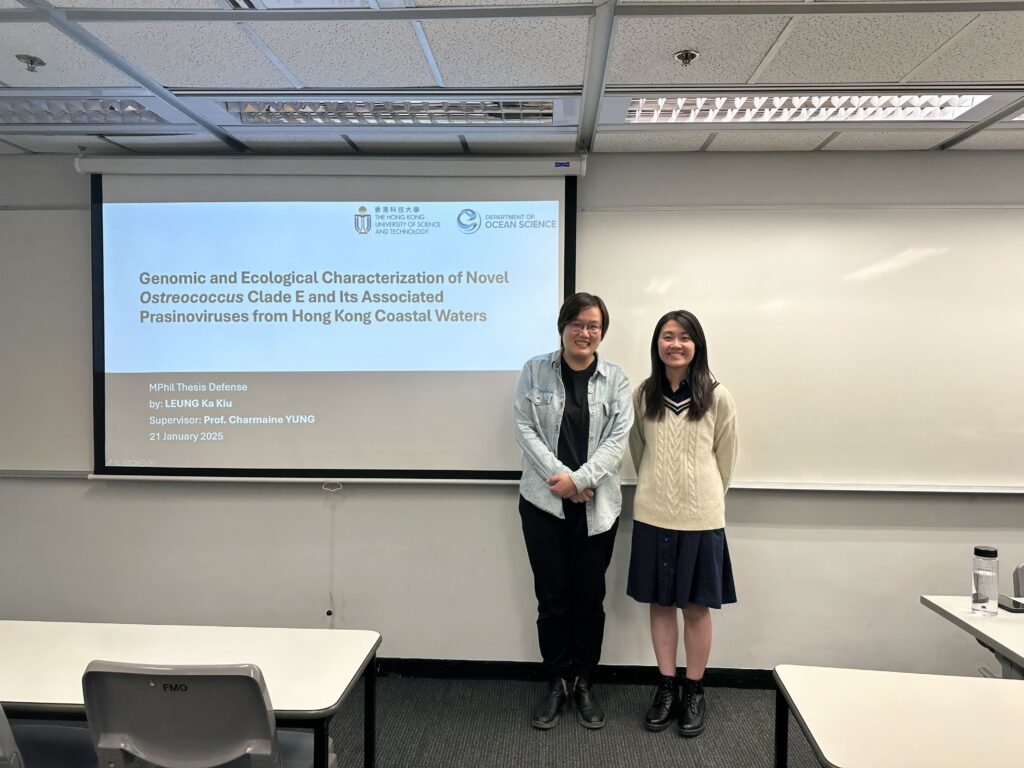
Congratulations to Shara on successfully defending her MPhil thesis “Genomic and Ecological Characterization of Novel Ostreococcus Clade E and Its Associated Prasinoviruses from Hong Kong Coastal Waters.” Her research on marine picoeukaryotes and their viral interactions in Hong Kong’s coastal waters makes valuable contributions to marine microbial ecology. Well done, Shara!