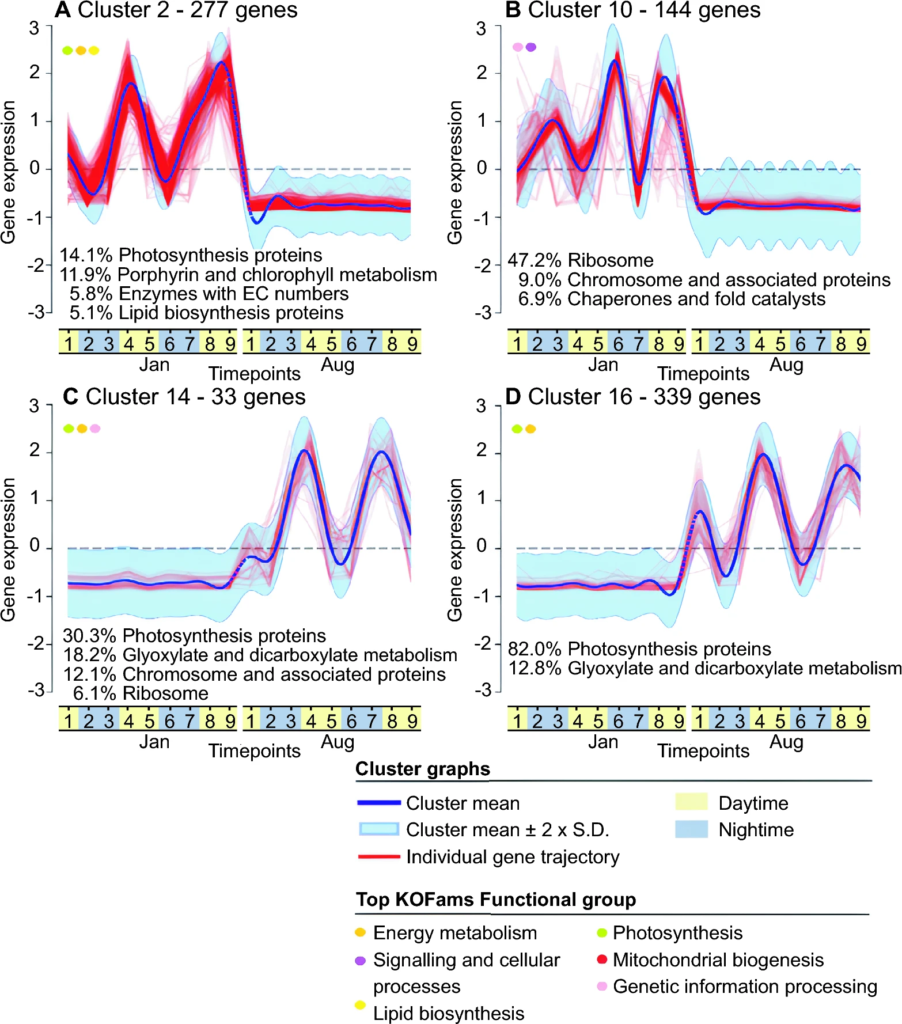
We are excited to announce the publication of our latest study, “Multi-domain temporal patterns reveal stable community membership but dynamic interactions in the coastal microbiome,” in Environmental Microbiome. Led by Elvira Rey Redondo and the team at HKUST, this research utilizes a multi-omics approach to map the complex seasonal dynamics of the South China Sea. Our findings uncover a fascinating “stability-flexibility paradox” within marine ecosystems. While the taxonomic membership of the microbial community remains surprisingly consistent between winter and summer, the interactions between these microbes undergo a massive rewiring. This suggests that coastal resilience relies less on species turnover and more on the community’s ability to reorganize its internal network in response to environmental shifts. The study also highlights the unexpected stability of viral communities, supporting the viral seed bank hypothesis and revealing how viruses act as persistent reservoirs that buffer environmental fluctuations. These insights are critical for understanding how marine food webs adapt to a changing climate.
Read the full open-access article here: https://doi.org/10.1186/s40793-025-00803-5